
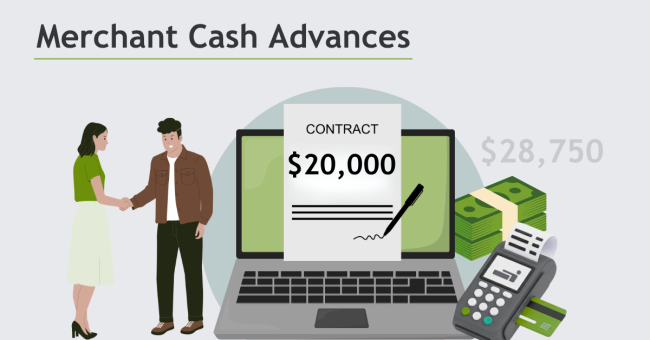
April is Financial Literacy Month, a time to build knowledge and confidence around financial habits. An essential part of that is knowing differences between financial products and the implications they have for your small business. One example that has become increasingly common, but is often misunderstood, is the Merchant Cash Advance (MCA).
While MCAs can seem like a quick solution in a moment of need, they often come with hidden costs that are not always obvious upfront and can have serious long-term consequences for your  business. Here is what you need to know.
What Is a Merchant Cash Advance?
A Merchant Cash Advance is not technically a loan. Instead, it is an advance on your future sales. You receive a lump sum of cash upfront, and in return, the provider takes a percentage of your daily or weekly revenue until the full amount, plus fees, is repaid. Because MCAs are not classified as traditional loans, they are not subject to the same regulations and protections.
Why Merchant Cash Advances Can Be Risky
At first glance, MCAs can feel convenient. They often come with fast approval, minimal paperwork, and quick access to funds. For business owners facing urgent needs, this speed can be appealing, especially when other financing options like SBA loans or community lender loans will take more time.
However, that speed often comes at a cost that is not fully transparent.
 MCA providers use factor rates instead of interest rates, which can make costs harder to understand. The true cost is often not clearly presented in a way that shows how it will impact your business over time. When converted to an annual percentage rate (APR), these products can reach extremely high levels. Repayments are typically taken automatically on a daily or weekly basis, which can strain your cash flow, especially during slower periods. If your revenue drops, payments still continue, which can increase financial pressure and limit your ability to cover essential expenses.
From our experience working with small business owners at Business Impact NW, we often see that once a business takes out one MCA, they are very likely to take out a second. This can happen when the first advance creates cash flow strain, leading business owners to seek additional quick funding. Over time, this pattern can spiral and become increasingly difficult to manage.
The Real Impact on Your Business
 Merchant Cash Advances do more than increase costs. They can disrupt the overall stability of your business in ways that are not always clear at the beginning.
Cash flow can become unpredictable, making it harder to manage day-to-day operations. Covering essential expenses like payroll, rent, and inventory may become more difficult as automatic withdrawals continue regardless of business performance. Over time, this strain can affect your long-term financial health, reduce flexibility, and limit your ability to grow. What begins as a short-term solution can quickly turn into an ongoing cycle that is hard to exit.
There are more affordable and transparent financing options available, like a CDFI (like us!) or SBA loan, even if they take more time and planning upfront. These options are designed to support sustainable growth and provide clearer terms so you can make informed decisions about your business finances.
Already Have a Merchant Cash Advance? You May Have Options
If you currently have a Merchant Cash Advance and are feeling the pressure, you are not alone. Refinancing your MCA into a more affordable and structured loan may be possible. Business Impact NW works with small business owners to explore options that can improve cash flow and reduce financial stress. Our team provides support without judgment and focuses on practical solutions that meet your needs.
How Business Impact NW Can Help
Business Impact NW is a mission driven community lender committed to supporting entrepreneurs, especially those who have been historically underserved.
We offer affordable small business loans, one on one advising, and financial coaching. We also provide guidance to help strengthen your business finances and make informed decisions about funding. For additional help the Money Smart for Small Business program also offers self-paced learning tools.
Financial Literacy Month is a great opportunity to take a closer look at your business finances and build a stronger foundation for the future. Learn more and connect with our team today.
About the author

Kyle Lovell
Kyle Lovell serves as the Chief Lending Officer at Business Impact NW, where she leverages over a decade of experience in the Community Development Financial Institution (CDFI) sector across the Pacific Northwest. In her capacity, she skillfully directs our lending department, implementing strategic initiatives for small businesses. In this role, she leads our Lending Department, focusing on driving success through her expertise in all aspects of small business lending and leadership. She fosters access to capital and financial education through targeted programs and resources, ensuring these businesses receive the guidance necessary for sustainable growth.