

Business Impact NW recently launched Sustainability Consulting to help small businesses navigate decisions connected to operating costs, regulations, and long-term investments using their real data and practical analysis.
This new service is especially relevant for established businesses with physical locations, equipment, utility bills, and regulatory requirements.
For many of these businesses, these decisions directly affect margins, compliance, and long-term stability.
To introduce this new service, I sat down with Allison Mettler, Vice President of Business Consulting & Sustainability.
What is Sustainability Consulting — and who is it for?
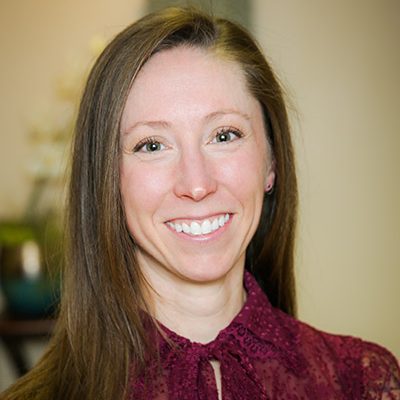 Sustainability Consulting at Business Impact NW is hands-on operational and financial analysis for established businesses. It helps owners evaluate energy use, equipment upgrades, compliance requirements, and other major operational decisions using their actual business data.
Businesses benefit most when they’re open to learning and improving, especially when energy, water, and building systems make up a significant part of their costs.
It’s probably not the right fit if someone is just looking for a quick fix without really wanting to understand how those systems work or how changes affect the long term.
You’re new to Business Impact NW — can you tell us about your background and what brought you here?
I came in with a mix of experience in business sustainability and operations. I have an MBA, a science background, and a variety of sustainability-related professional certifications in areas like green chemistry, net-zero strategy, and decarbonization. A lot of my work has been in utilities, compliance, and operations, where I’ve helped design and support energy-efficiency, water-conservation, and waste-reduction projects.
I was drawn to Business Impact because I saw an opportunity to build out a Sustainability Consulting program that helps small businesses make sense of complex systems and turn them into practical solutions.
What are you helping businesses figure out?
 I help businesses that feel stuck or overwhelmed by operating costs, sustainability expectations, and confusing regulations.
Why are my energy bills so high? What upgrades are actually worth it? What do I need to do to stay compliant? Is this even affordable? Where should I start? Those kinds of things.
It could be where they’re wasting money, which changes will make a difference, which options fit their budget, operations, and goals, and what steps make sense to take first.
Basically, it’s connecting the dots between data, goals, and real-world action.
Numbers, not guesses. Using data from the business itself, I can say that if you invest in this measure, you will save x dollars.
What kinds of regulatory requirements are these business owners facing?
A lot of this depends on the industry. For example, some commercial buildings in Washington and Oregon are required to report their energy use, and cities like Seattle have additional requirements on top of that. Part of the work is figuring out where you operate and what actually applies to you, instead of trying to keep track of everything at once.
 Most of the time, people know compliance rules exist. Where things fall apart is their ability—and sometimes their willingness—to meet them. Especially if a business hasn’t historically operated in compliance, those can be hard conversations. And the reality is, it can get expensive.
When I worked in the compliance department for a large food distributor, for example, the company had third-party auditors come in to verify compliance. If a customer requires that in order to keep doing business with you, then it becomes a decision: is paying for a third-party audit worth the cost of maintaining that relationship? Or do you walk away from that customer and try to make up that revenue somewhere else?
In situations like that, we acknowledge the risks and opportunities of both options. We look at current expenses, potential income, timelines, expected equipment lifespan, and incentives to show potential returns. With the full picture, owners can confidently make decisions that benefit the business.
How do rebates, incentives, or financing factor into these decisions?
Very significantly. It can turn a someday project into a now project. If owners understand what’s available and what they qualify for, they can take advantage of an opportunity to reduce operational costs and invest those savings back into the business.
How does this work fit alongside Business Impact NW’s lending and advising services?
Our lending, advising, and consulting services work together to provide a range of support that prepares businesses to succeed now and into the future. Each team provides different tools to enhance a business’s performance, creating a coordinated, wrap-around approach.
Consulting offers business leaders a deeper dive into their operations to identify actionable cost-reduction measures along with the data to justify potential debt.
What’s something you’ve learned from working with businesses on these decisions?
 How much business owners really do want to reduce waste, be responsible, and do what’s right for their community. They just don’t always have the time or the tools to figure it out.
When we talk about sustainability, it’s not just the environment. It’s the people who live in that environment, too. And most of the time, that’s what businesses care about most—the people. Their families, their employees, their customers, their community. When you start there, it connects to everything else. Healthier people, cleaner air and water, less waste. It’s all tied together. Small businesses care about their people, and they want to contribute to a healthier future. They just need help figuring out how to get there.
If someone reading this is on the fence, what’s the easiest way to know whether it’s worth having a conversation?
If you’ve ever thought, I know something could be better, but I don’t know where to start, that’s enough. You don’t need to have it all figured out. That’s what the conversation is for.
Sustainability decisions don’t have to feel overwhelming, especially when you’re working with your own numbers.
To learn more about the Sustainability Consulting at Business Impact NW, visit the page here. And to connect directly with Allison, you can email her directly at: [email protected]
About the author

(fAYth ham-uhl-tuhn)
As Senior External Affairs Manager at Business Impact NW, Faith provides strategic oversight for marketing, website management, and organizational events, ensuring day-to-day efforts align with broader organizational goals. She acts as the project manager for key events, coordinating timelines, deliverables, and cross-departmental collaboration while maintaining consistency in branding and messaging. Faith holds a bachelor’s degree in Tourism Management from Central Washington University.